




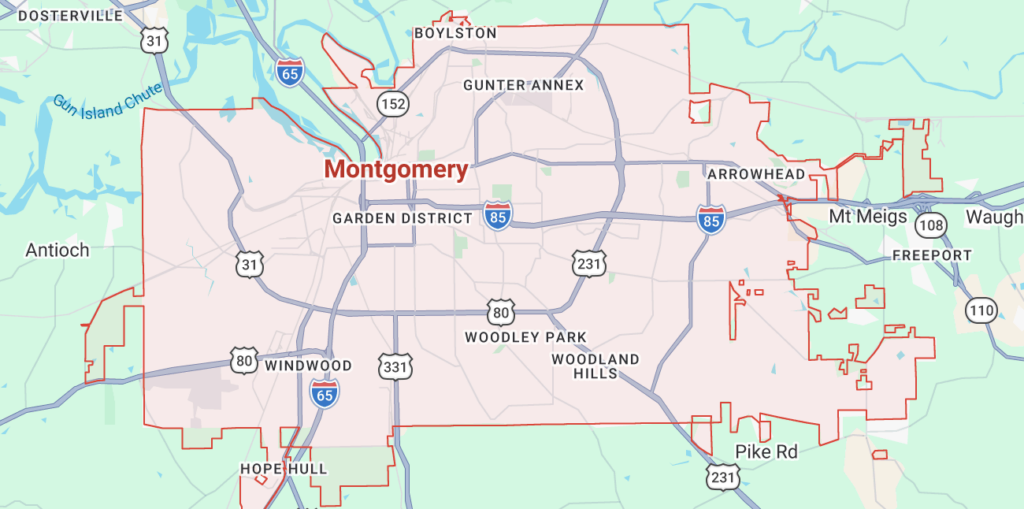
The Law Offices of Robert Wayne Pearce, P.A. has been fighting for victims of investment fraud throughout Alabama for decades. We know exactly what it takes to hold brokers, advisors, and brokerage firms accountable for the harm they cause. We handle investment fraud cases across the state, including right here in Montgomery. If your broker misled you, mismanaged your money, or placed you in investments that were never right for you, we want to hear your story. Call us today at (800) 732-2889 or send us a secure message online.
What is investment fraud?
Investment fraud happens when a broker, advisor, or firm uses deception to steal or mismanage your money. Securities fraud violates both federal law and Alabama statutes, including SEC Rule 10b-5. That rule prohibits any act or omission that creates a false impression in connection with the purchase or sale of a security. Many victims have no idea anything is wrong until they review their account statements and find unexplained losses that were never disclosed to them. By then, the damage has often been building for months.
What are common examples of investment fraud in Montgomery?
Montgomery investors face a wide range of securities fraud types, and every one of them has a legal remedy attached to it. Identifying which scheme was used against you can determine which legal path gives you the strongest shot at recovery. If anything below sounds familiar, call us today.
Ponzi schemes
A Ponzi scheme pays existing investors using money from new investors rather than from any real investment profits. These schemes have no legitimate foundation in the securities industry and are designed to collapse the moment new money stops coming in. Bernie Madoff’s operation stole $65 billion before it fell apart, making it the largest Ponzi fraud in history. Victims who move quickly after a scheme unravels consistently recover more than those who wait.
Pump and dump schemes
Pump and dump fraud works by circulating false statements about a stock to artificially inflate its price. That gives insiders the window they need to sell their shares before the price crashes. Promoters spread this manufactured hype through social media campaigns, cold calls, and email blasts targeting ordinary investors. By the time you realize what happened, the people who orchestrated the scheme have already walked away with their money while yours is gone. These schemes violate SEC Rule 10b-5 and are actively pursued by federal regulators.
Churning
FINRA holds every broker to a strict duty of loyalty, and churning violates that obligation entirely. Your account should be growing, not shrinking under the weight of commissions you never agreed to pay. Brokers who do this violate FINRA rules and a fundamental duty to act in your best interest. You end up losing twice: once through the bad trades themselves, and again through the commissions you never agreed to pay. If you notice high trade volume paired with steadily declining returns, that pattern is worth taking to a FINRA arbitration attorney immediately.
Unauthorized trading
If you open your account statements and find transactions you never discussed, never approved, and never even heard of, you may be a victim of unauthorized trading. This occurs when a broker executes trades in your account without your knowledge or consent. FINRA rules are explicit that brokers must obtain authorization before executing any discretionary trade, and violating that requirement is actionable.
Unsuitable investments
No broker is allowed to place you in unsuitable investments, and the Securities and Exchange Commission holds them legally responsible for every product recommendation they make. Unsuitable investment recommendations occur when a broker places you in products that do not match your risk tolerance, your financial goals, or your stage of life. The Securities and Exchange Commission requires brokers to assess suitability before recommending any investment, and that obligation is not optional. A retiree placed into high-risk speculative stocks with no explanation of the downside is one of the most common examples we see. Brokers who ignore your stated goals to earn higher commissions can be held personally liable for every dollar of resulting losses.
Misrepresentation and false statements
Misrepresentation fraud occurs when a broker or advisor makes false statements about an investment to convince you to buy into it. Omitting material risks and overstating projected returns are both fully actionable under securities law and FINRA rules, even if nothing was put in writing. We understand how deeply this type of fraud cuts, because it means someone you trusted and relied on looked you in the eye and lied. The SEC, the exchange commission’s enforcement arm, and FINRA both pursue these cases. You also have the right to bring a private civil action to recover what was taken from you.
Annuity and REIT fraud
Variable annuity products and non-traded REITs are among the most misused investment vehicles a financial advisor can recommend. Advisors earn outsized commissions on these products and sometimes push them onto clients regardless of whether they are appropriate. Those clients can end up facing serious investment losses with no straightforward way to exit. An elderly investor locked into a ten-year surrender-charge annuity who needs access to that money has very few options. FINRA and state regulators scrutinize annuity and REIT sales heavily for exactly this reason.
What are the warning signs of investment fraud?
If your broker is making promises that sound too good to be true, that is your first red flag and you should not dismiss it. Unexplained changes in your account statements, missing funds, or transactions you never authorized all demand immediate attention and a conversation with an attorney. We understand how confusing this can feel, especially when you trusted this person with money you spent years building. Advisors who discourage questions, delay sending account statements, or pressure you to reinvest before you have time to think are showing you exactly who they are. Any guarantee of fixed returns with zero risk is a textbook sign of fraud.
Who commits investment fraud in Alabama?
Investment fraud in Alabama is committed by individuals and institutions across the financial services industry, and stockbroker fraud alone accounts for a significant portion of the cases we handle. Knowing who caused your losses is the first step toward building the right legal strategy, and an experienced attorney can pursue claims against individuals and firms of every size.
Financial advisors and stockbrokers
Financial advisors and stockbrokers are the most common perpetrators of investment fraud against individual retail investors, and the deceptive practices they use range from subtle misrepresentation to outright theft. Advisors who churn accounts, recommend products they know are unsuitable, or actively lie about risk are personally liable for the damage they cause. A broker who steals client funds by forging wire transfer authorization forms, for example, can be pursued directly through FINRA arbitration. Before working with any advisor, you can search their history for free on FINRA’s BrokerCheck database.
Brokerage firms
Brokerage firms can be held liable when their brokers commit fraud, and they can also be held liable when they fail to catch it. Large broker-dealers, including firms like Janney Montgomery Scott, have faced FINRA claims centered on failure to supervise their registered representatives. When a firm receives red flags about a broker’s conduct and does nothing, it shares direct responsibility for every loss that follows. When a firm turns a blind eye to a broker’s misconduct, it becomes part of the problem. You have every right to hold it accountable alongside the individual who harmed you.
Institutional investors
Securities law violations at the institutional level can cause widespread harm to individual retail investors who never saw it coming. This type of fraud typically violates securities law through market manipulation, insider trading, or material misrepresentation carried out at a scale that makes it hard for ordinary investors to detect. A hedge fund manager who falsifies performance reports to attract new capital is committing the same core fraud as any dishonest broker, just with larger numbers behind it. These cases frequently run in parallel across SEC enforcement, civil litigation, and FINRA arbitration proceedings.
What is the Alabama Securities Commission?
The Alabama Securities Commission is the state agency responsible for regulating the securities industry and protecting Alabama investors from fraud and misconduct. The ASC enforces the Alabama Securities Act, and its authority is broad: it can investigate broker misconduct, revoke licenses, issue cease-and-desist orders, and refer cases to prosecutors for criminal action. If you believe you have been defrauded, you can file a formal complaint directly with the ASC, which creates an official record and triggers a state-level investigation. Doing so preserves your legal options and often adds meaningful weight to a parallel FINRA arbitration or civil case.
How does FINRA arbitration work in Montgomery?
FINRA arbitration is the primary legal process most investors use to recover losses from broker or advisor misconduct. The Financial Industry Regulatory Authority operates a dispute resolution forum where claims are presented to and decided by a panel of trained arbitrators rather than a judge or jury. Most standard brokerage agreements require investors to resolve disputes through this process, which means civil court is often not an option. To get started, a Montgomery investor with a broker fraud claim files a statement of claim directly with FINRA outlining the misconduct and the damages sought. Under FINRA Rule 12206, all claims must be filed within six years of the event that gave rise to the dispute.
What is the statute of limitations for investment fraud in Alabama?
The statute of limitations for investment fraud in Alabama is set by the Alabama Securities Act, which gives most victims two years from discovery to file a legal claim. That window moves faster than most people expect. Under the Alabama Securities Act § 8-6-19, claims must be brought within two years of discovery. The absolute outer limit is five years from the date of the actual violation, regardless of when it was discovered. If you uncovered suspicious activity in your account in early 2024, contacting an attorney now is not just advisable. It is necessary to protect your right to recover anything at all. The Alabama Securities Commission maintains records that can help establish when fraud began if there is any dispute over the discovery timeline.
Can I recover my investment losses?
Yes, and whether you pursue FINRA arbitration or civil litigation, the range of what you can recover is often broader than you might expect. FINRA arbitration awards and civil litigation judgments can both include lost principal, accrued interest, and punitive damages when the financial loss resulted from intentional or reckless misconduct. The licensed investment and securities fraud attorneys at the Law Offices of Robert Wayne Pearce, P.A. have recovered over $185 million for defrauded investors across the country, and we bring that same commitment to every case we take in Alabama. Courts and FINRA panels award full recovery regularly when the evidence is clear.
What should I do if I suspect investment fraud?
If you suspect investment fraud, the first thing to do is stop all account activity with that broker and start gathering every financial document you can find. Pull together your account statements, trade confirmations, contracts, and any written or digital correspondence you have had with the advisor or brokerage firm. Do not confront the broker directly, because doing so can alert them to cover their tracks or destroy records before any investigation gets underway. Your next call should be to an investment fraud attorney for a free consultation, where you can walk through what happened and get a clear picture of your legal options.
How can a Montgomery investment fraud lawyer help you?
A Montgomery investment fraud lawyer investigates your case, builds your claim, and fights to recover every dollar you lost. Your attorney handles the entire FINRA arbitration process from start to finish, filing the statement of claim, managing discovery, and representing you directly before the panel. We understand how overwhelming it feels to go up against a large brokerage firm on your own, and we want you to know you do not have to. Your attorney gathers expert witnesses, financial records, and regulatory filings to give your case the strongest possible foundation.
What are your legal options for investment fraud in Alabama?
FINRA arbitration, civil litigation, and complaints filed with the SEC or Alabama Securities Commission are all available to Alabama investors. The right path depends on the nature of the misconduct and who was responsible. FINRA arbitration is the fastest and most common route for broker misconduct claims, and most cases resolve within 12 to 18 months. You can also file a complaint with the SEC or the Alabama Securities Commission to trigger a regulatory investigation running alongside your private claim. In cases where the fraud rises to the level of criminal activity, investors may pursue restitution through criminal proceedings as well. An experienced attorney will assess your full situation and tell you which combination of legal options gives you the strongest path to recovery.
Do you handle investment fraud cases on a contingency fee basis?
Yes, the Law Offices of Robert Wayne Pearce handle investment fraud cases on a contingency fee basis, which means you pay nothing unless we win. That arrangement is not just a convenience, it is a commitment. When our fee depends entirely on your recovery, every decision we make is focused on getting you as much money as possible. You will never face upfront costs or hourly billing, no matter how long or complex your case becomes. Most people are genuinely surprised to learn that quality legal representation in these cases costs them nothing unless their case succeeds.
Why choose the Law Offices of Robert Wayne Pearce, P.A.?
Robert Wayne Pearce has spent decades representing victims of securities fraud and recovering investment losses that other attorneys turned away. Our firm brings extensive experience in FINRA arbitration, Alabama securities litigation, and complex multi-party investment fraud cases. These matters require both legal precision and a real understanding of how the financial industry actually operates. We have recovered more than $185 million for defrauded investors and are ready to fight for what you are owed. Brokerage firms have teams of lawyers working to minimize what they pay out, and our attorneys know every tactic they use because we have spent years going up against them.
How long does an investment fraud case take in Alabama?
Most FINRA arbitration cases in Alabama resolve within 12 to 18 months from the date a claim is filed. Cases involving large sums, multiple defendants, or complex investments tend to stretch closer to 18 to 24 months as discovery takes longer and scheduling becomes more involved. An investor who filed a claim in January 2024, for example, would likely see a FINRA hearing scheduled sometime in late 2025 under typical timelines. The number of parties involved and the nature of the underlying investments are the two biggest factors that determine how long your case will take.

Contact the Law Offices of Robert Wayne Pearce, P.A. to learn more about investment fraud in Montgomery
If you have suffered investment losses due to broker or advisor misconduct in Montgomery, the time to act is now. Our Montgomery investment fraud attorneys offer a free consultation and handle every case on a contingency fee basis, so there is no financial risk to reaching out and understanding your options. We have helped investors across Alabama recover what was rightfully theirs, and we are prepared to do the same for you. Call the Law Offices of Robert Wayne Pearce, P.A. today at (800) 732-2889 or send us a message online.