
Attorney Robert Wayne Pearce and the Law Offices of Robert Wayne Pearce, P.A. represent Puerto Rico investors who lost money due to securities fraud such as broker misconduct, unsuitable recommendations, and brokerage firm negligence.
With over 45 years of experience in securities law and FINRA arbitration — including dozens of Puerto Rico bond fund cases resulting in multi-million dollar recoveries — the Puerto Rico investment fraud lawyers at the firm help individual investors, retirees, trusts, and institutions pursue claims against banks and firms and their brokers’ and advisors’ misdeeds.
If your broker overconcentrated your portfolio in Puerto Rico debt, used margin loans or non-purpose loans to amplify your exposure, or failed to warn you about the concentration, liquidity, and leverage risks in your account, you may have a claim to recover your losses through FINRA arbitration.
Claims are not limited to bond fund investors — Puerto Rico residents and former residents have been harmed by the full range of securities fraud, from churning and unauthorized trading to variable annuity fraud and Ponzi schemes, which we can help with.

Securities Code Violations and Puerto Rico Investor Protections
Puerto Rico investors are thankfully protected by many securities laws because the island operates under both federal and territorial regulatory authority. This dual structure creates multiple enforcement mechanisms and legal theories that investors can use to pursue recovery — an advantage that mainland investors in many states do not share to the same degree.
The Puerto Rico Uniform Securities Act
The Puerto Rico Uniform Securities Act is the territory’s primary investor protection statute because it establishes conduct standards for broker-dealers, investment advisers, and securities issuers operating on the island. The Act prohibits fraud, misrepresentation, and omission of material facts in connection with the offer, sale, or purchase of any security.
It also grants the Puerto Rico Office of the Commissioner of Financial Institutions enforcement authority to investigate violations, revoke registrations, and impose civil penalties against firms and individuals who breach their obligations to investors.
Suitability Violations
Suitability violations are among the most common securities code infractions in Puerto Rico because brokers routinely recommended high-risk, illiquid products to conservative investors without performing adequate due diligence.
Under both FINRA Rule 2111 and the Puerto Rico Uniform Securities Act, a recommendation is unsuitable when it fails to account for the investor’s age, risk tolerance, liquidity needs, investment timeline, and overall financial situation. The widespread sale of concentrated Puerto Rico bond fund positions to retirees living on fixed income is a textbook example of this violation at scale.
Unauthorized trading is prohibited under Puerto Rico securities law because every transaction in a non-discretionary account requires the investor’s prior informed consent.
A broker who executes trades without authorization — whether to generate commissions, rebalance a portfolio without approval, or act on the broker’s own judgment — violates both territorial statute and FINRA Rule 3260. Puerto Rico investors harmed by unauthorized transactions can seek compensatory damages, disgorgement of commissions, and in egregious cases, punitive damages.
Misrepresentation and Failure to Disclose
Misrepresentation and failure to disclose material information are actionable under Puerto Rico law because investors are entitled to make decisions based on complete and accurate facts.
A broker who overstates projected returns, minimizes the risks of a particular product, or omits key details about fees, conflicts of interest, or the financial condition of an issuer has committed a securities code violation. Puerto Rico’s statutory framework treats both affirmative misstatements and material omissions as independently actionable — meaning a broker’s silence about a known risk can carry the same legal consequences as an outright false statement.
The Puerto Rico Deceptive Trade Practices Act
The Puerto Rico Deceptive Trade Practices Act provides an additional layer of protection because it prohibits deceptive and unfair business conduct across all commercial transactions, including securities sales.
This statute broadens the scope of potential claims beyond traditional securities fraud theories and may provide for enhanced remedies, including attorney’s fees, that are not available under federal securities law alone.
Churning, Front-Running, Insider Trading, and Failure to Supervise
Churning, front-running, insider trading, and failure to supervise are all independently sanctionable under Puerto Rico’s regulatory framework because each represents a distinct breach of the duties that brokers, advisors, and their supervising firms owe to customers.
Churning generates excessive commissions at the investor’s expense. Front-running exploits non-public order information for the broker’s personal benefit. Failure to supervise holds firms accountable when compliance systems fail to detect or prevent misconduct by individual representatives.
Private Rights of Action and Enforcement
Puerto Rico’s securities code violations carry both civil and criminal penalties because the territorial legislature designed the regulatory framework to deter misconduct through meaningful consequences.
Investors do not need to wait for a regulator to act — private rights of action under the Puerto Rico Uniform Securities Act allow individuals to file claims directly and seek compensatory damages, rescission of fraudulent transactions, and recovery of attorney’s fees and costs.
Other fraud and misconduct cases our Puerto Rico investment fraud lawyers can help with:
- Fraud & material misrepresentation / omission – classic 10b-5, Blue-Sky and common-law fraud cases.
- Unsuitable or high-risk investments (e.g., leveraged ETFs, inverse funds, cryptocurrencies, speculative stocks).
- Negligence & breach of fiduciary duty – failure to act in the customer’s “best interest.”Margin-call liquidations and other abusive use of margin.
- Over-concentration / lack of diversification leading to outsized single-sector or single-issuer losses.
- Private-placement & Regulation D fraud, REITs, hedge funds, structured notes, GPB, etc.
- Selling away / unregistered securities and “off-book” products.
- Failure to supervise & best-interest rule violations by the brokerage firm.
- Theft, forgery, elder financial abuse, undue influence in trusts or investment accounts.
What Does the FINRA Arbitration Process Look Like?
FINRA arbitration is a private dispute resolution process that serves as the primary forum for securities fraud claims. Most brokerage account agreements include mandatory arbitration clauses, which means FINRA arbitration — not a court lawsuit — is typically the path to recovery.
The process begins with filing a Statement of Claim that identifies the brokerage firm and brokers responsible, describes the misconduct, and states the damages sought. The respondent firm files an answer, and the case proceeds through document exchange, pre-hearing conferences, and an evidentiary hearing before a panel of one or three arbitrators.
Hearings in Puerto Rico bond fund cases are typically scheduled at FINRA’s San Juan hearing location. Cases involving mainland investors can also be heard at other FINRA locations. Most cases resolve within 12 to 16 months, and the majority settle before a hearing takes place. There is no limit on the amount of damages a panel can award, and FINRA arbitration awards are legally binding and enforceable in court.
Investment Losses? We Can Help
Discuss your legal options with an attorney at The Law Offices of Robert Wayne Pearce, P.A.
or, give us a ring at (800) 732-2889.
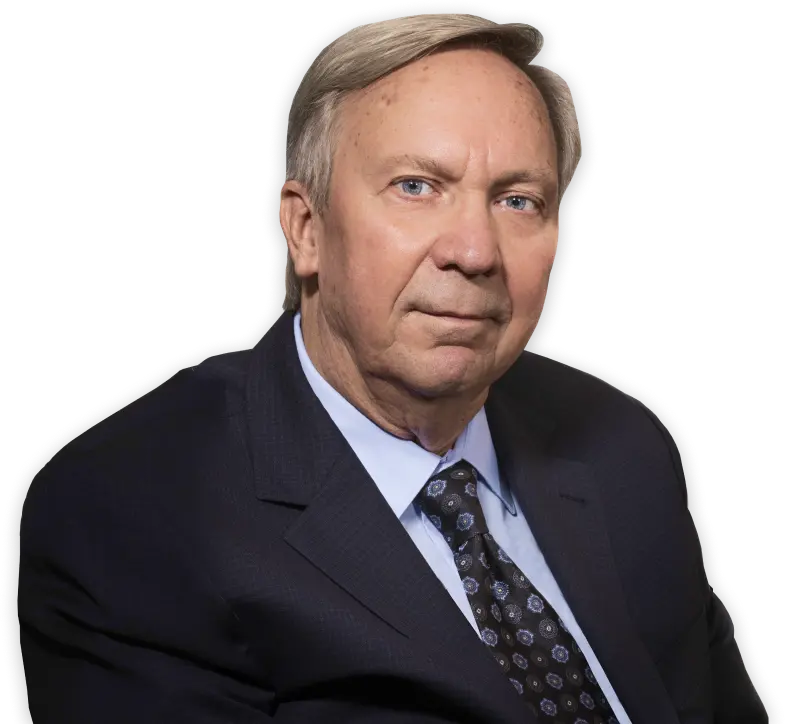
Talk to an Securities Fraud Attorney About Your Puerto Rico Investment Losses
Attorney Robert Wayne Pearce has over 45 years of experience in securities law and FINRA arbitration. He has personally represented Puerto Rico investors in dozens of bond fund cases, securing recoveries that include a $5.8 million arbitration award, an $8.5 million settlement, and numerous other multi-million dollar results for clients harmed by overconcentration and overleveraging in Puerto Rico municipal bonds and closed-end funds.
Consultations are free and confidential. Call the Law Offices of Robert Wayne Pearce, P.A. at (800) 732-2889 to discuss your case and find out what options are available to you.
Our law firm serves clients throughout Puerto Rico:
- San Juan
- Aguadilla
- Arecibo
- Bayamon
- Cabo Rojo
- Caguas
- Carolina
- Cayey
- Dorado
- Fajardo
- Guayama
- Guaynabo
- Isabela
- Mayaguez
- Ponce
- Rio Grande
Frequently Asked Questions
What is the Departamento de Asuntos del Consumidor (DACO)
The Departamento de Asuntos del Consumidor — known as DACO — is Puerto Rico’s cabinet-level consumer protection agency because Law No. 5 of 1973 established it as the centralized authority responsible for defending consumers against deceptive and fraudulent business practices across the territory.
DACO matters to investors who lost money because the agency investigates complaints involving misleading financial product sales and can order corrective action, impose fines, and refer criminal conduct to the Puerto Rico Department of Justice. Filing a DACO complaint creates a formal government record of broker misconduct — documentation that can strengthen a subsequent FINRA arbitration claim or civil lawsuit.
The Puerto Rico Consumer Protection Act provides additional remedies because it guarantees the right to accurate information, prohibits deceptive practices, and authorizes monetary damages and contract rescission when businesses violate these standards. Investors who were misled about the risks, fees, or expected performance of a financial product may have claims under this statute on top of federal securities law and Puerto Rico Uniform Securities Act causes of action.
DACO operates alongside the Office of the Commissioner of Financial Institutions (OCFI), FINRA, and the SEC — each with distinct jurisdiction. A single act of broker misconduct can trigger overlapping enforcement authority from multiple regulators, which means an experienced Puerto Rico investment fraud attorney can pursue recovery through several channels simultaneously.